If you have ever driven through Chestnut Hill and felt like every street tells a different story, you are not imagining it. This neighborhood was shaped over decades, across multiple municipalities, with homes that reflect changing tastes, transportation access, and large landscaped sites. If you are buying, selling, or renovating here, understanding the architectural language of Chestnut Hill can help you see value more clearly. Let’s dive in.
Why Chestnut Hill Architecture Stands Out
Chestnut Hill is not a single planned subdivision with one uniform look. It spans parts of Brighton, Brookline, and Newton, and much of its residential development took shape after 1880 as rail and trolley access expanded the area. According to the Brookline Historical Society’s overview of Chestnut Hill, the neighborhood’s character comes from layered development, large landscaped lots, and homes that follow the natural terrain.
That last point matters more than many buyers realize. In Chestnut Hill, the setting is part of the architecture. The relationship between the house, the lot, mature trees, grade changes, and approach from the street often contributes as much to a home’s appeal as the facade itself.
Georgian and Georgian Revival Homes
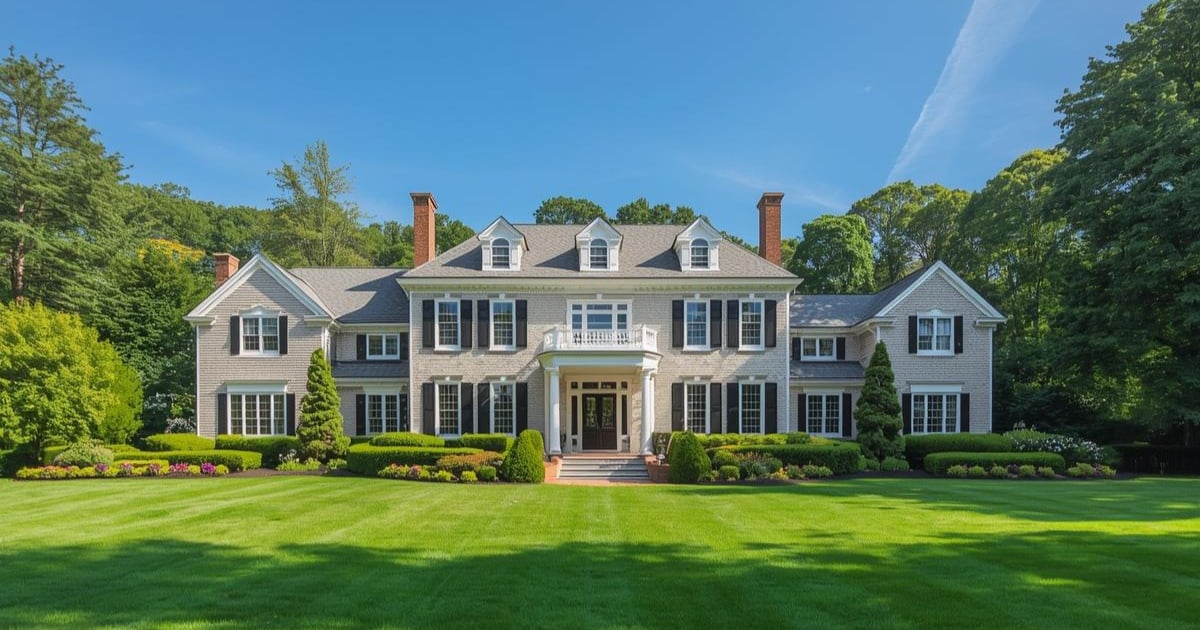
Georgian and Georgian Revival homes bring a sense of order and formality to the streetscape. These houses are usually easy to spot because of their symmetry, centered entry, multi-pane sash windows, shutters, and restrained classical detail. Historic New England’s architectural style guide and local district materials both identify this style as an important part of Chestnut Hill’s historic fabric.
For you as a buyer or seller, these homes often signal timeless curb appeal. The rooflines feel balanced rather than dramatic, and the front elevation usually reads as composed and formal. That visual discipline is a big part of why Georgian-inspired homes continue to attract strong interest.
What Defines the Style
Key features often include:
- A symmetrical front facade
- A centered front door
- Multi-pane sash windows
- Shutters
- Classical trim or door surround details
- A formal, proportion-driven roofline
Inside, Georgian-inspired homes are generally associated with more formal room hierarchy and a strong sense of proportion. While that interior description comes from broader style history rather than a Chestnut Hill-specific survey, it helps explain why these homes often feel more structured than newer open-plan layouts.
Colonial Revival Homes in Chestnut Hill
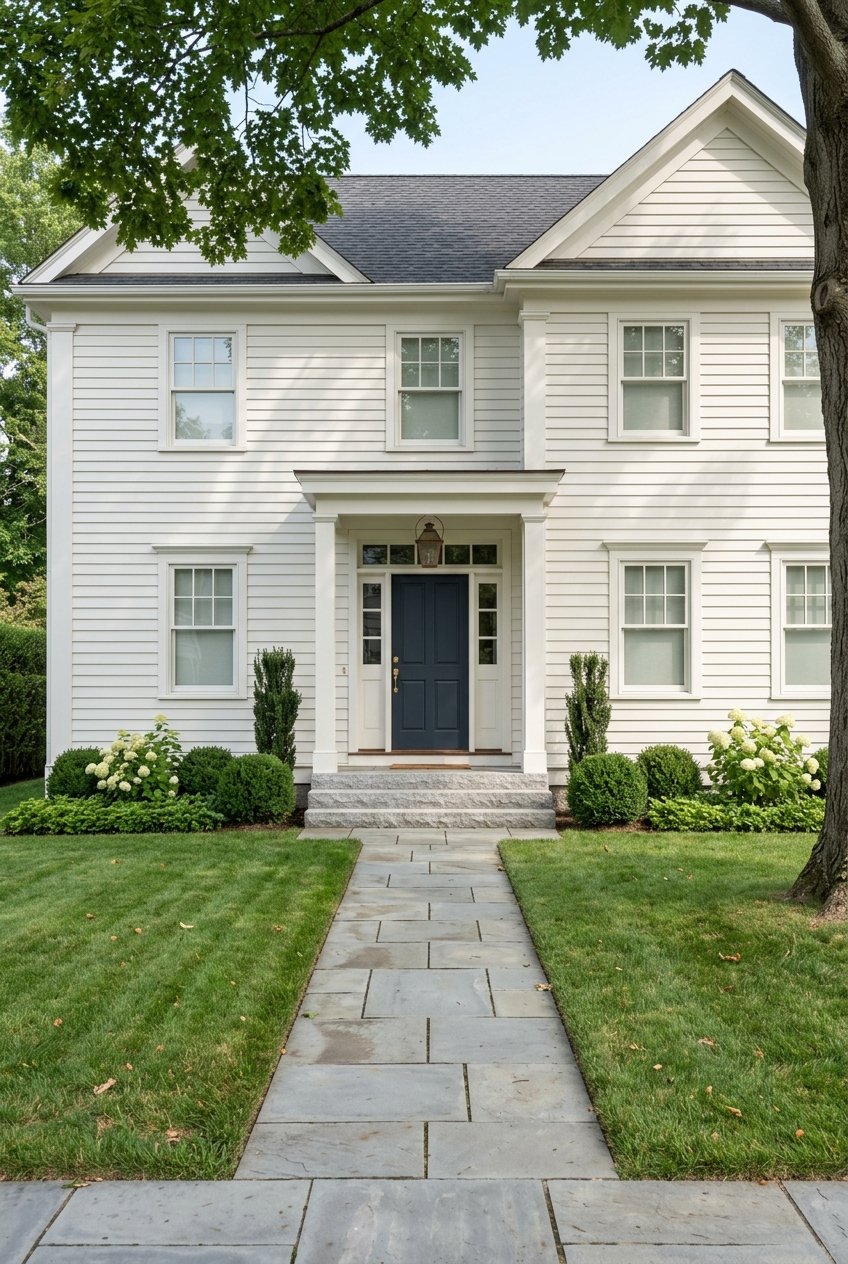
If one style best represents many Chestnut Hill blocks, it is Colonial Revival. The National Park Service description of Colonial Revival architecture highlights its balanced facades, centered doors, multi-pane windows, fanlights, sidelights, Palladian windows, and pedimented entries. Newton also identifies Colonial Revival as one of the neighborhood’s predominant styles in its historic district materials.
In Chestnut Hill, Colonial Revival homes range from estate-scale properties to more modest early 20th-century houses. The Brookline Chestnut Hill local historic district study report notes examples with gambrel roofs, pedimented dormers, paired windows, fanlights, sidelights, and oval or Palladian windows.
Why Buyers Respond to Colonial Revival
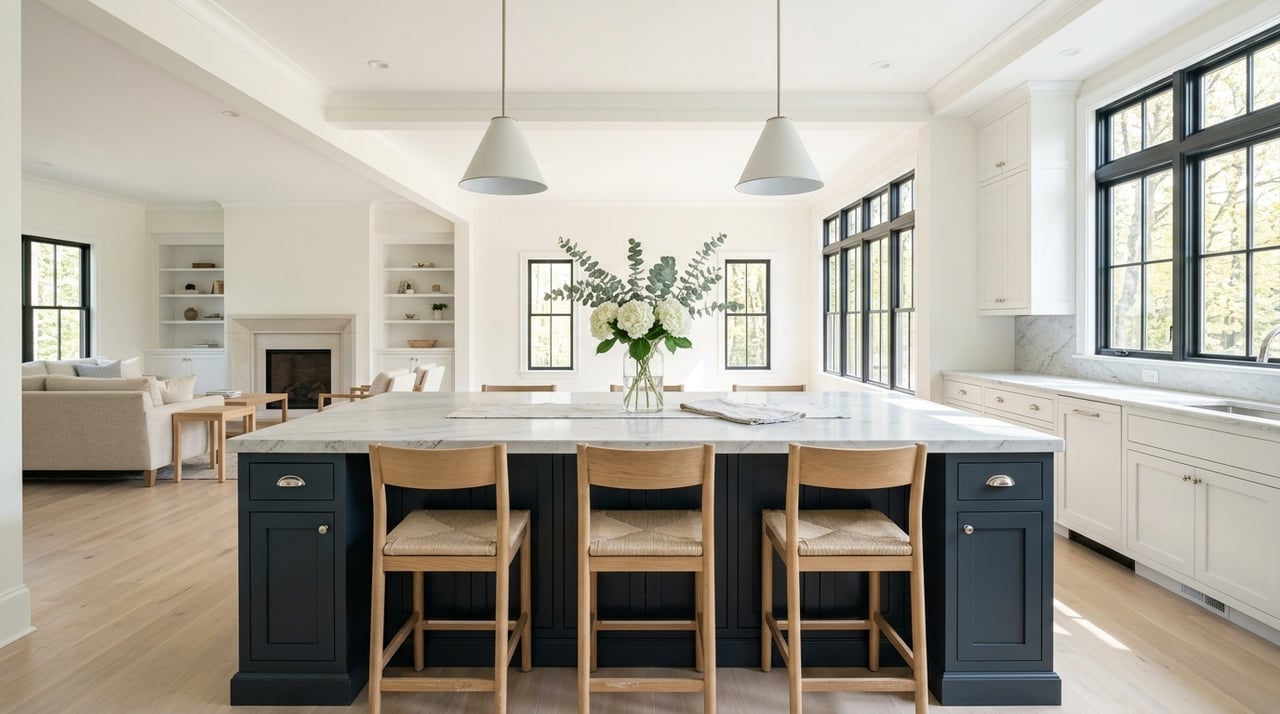
Colonial Revival tends to feel both classic and adaptable. Unlike earlier colonial precedents, these homes often have somewhat more open interior planning, which can make them attractive to buyers who want traditional architecture without sacrificing everyday function.
From a resale perspective, this style often performs well because the look is familiar, balanced, and broadly appealing. When the original facade rhythm remains intact, especially the centered entry, window spacing, and roof silhouette, the home usually presents with stronger architectural coherence.
Tudor Revival’s Distinctive Presence
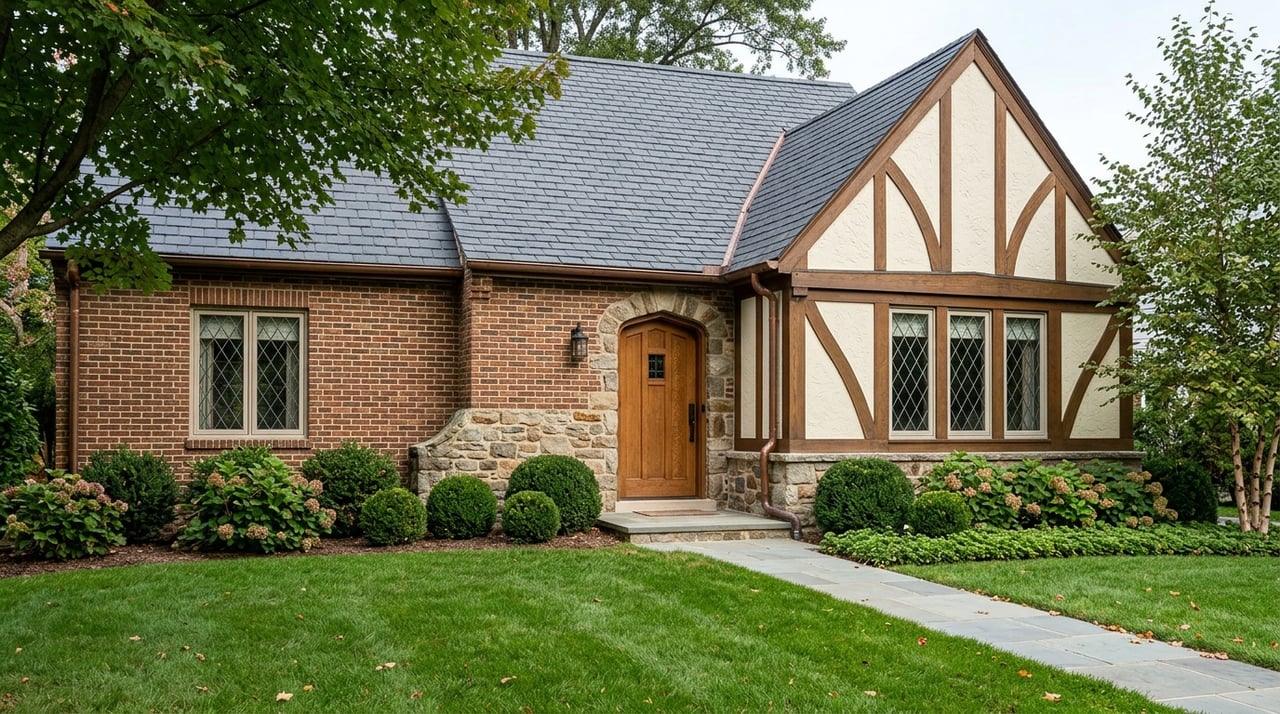
Tudor Revival homes are some of the most visually memorable properties in Chestnut Hill. They often stand apart from neighboring Colonial Revival homes because they are more asymmetrical, more vertical in feel, and more picturesque overall. The National Park Service guidance on Tudor Revival describes steeply pitched roofs, cross gables, half-timbering, mixed masonry, tall narrow casement windows, recessed entries, and prominent chimneys.
The Brookline study report points to local examples with steep roof forms, leaded glass, tall grouped windows, and half-timbering. These details give Tudor homes a strong sense of identity, which can be a major draw for architecture-minded buyers.
Quick Tudor Clues
Look for features such as:
- Steep gable or cross-gable roofs
- Brick or stone exteriors, sometimes mixed with stucco
- Decorative half-timbering
- Tall, narrow windows
- Leaded or diamond-pane glass
- Prominent chimneys
These homes often suggest a cozier and more intimate interior feeling than Colonial Revival houses, although Chestnut Hill sources document the exterior more clearly than the room layouts. For a buyer comparing styles, Tudor often reads as warmer, moodier, and more storybook in character.
Shingle Style and Arts and Crafts Homes
Shingle Style is one of the essential architectural threads in Chestnut Hill, especially in the earlier residential fabric. Historic New England describes it as an architect-designed American style defined by continuous wood shingles, asymmetrical massing, irregular roofs, broad porches, sparing ornament, and large windows with simple detailing.
In Chestnut Hill, Shingle Style often overlaps visually with Arts and Crafts and other revival influences. The Brookline study report describes local houses with free-form shingle cladding, stone porch supports, steep cross gables, exposed rafter ends, wide eaves, and expansive windows for light.
Why These Homes Feel Different
Compared with Georgian or Colonial Revival homes, Shingle and Arts and Crafts houses often feel more relaxed and more connected to the landscape. Their massing tends to be less rigid, and the materials usually create a softer, more natural impression.
That matters in Chestnut Hill because the neighborhood’s historic identity is tied not just to architecture, but to how homes sit on the land. A well-preserved Shingle or Arts and Crafts home often feels especially rooted to its lot and surroundings.
Later Architectural Layers
Chestnut Hill is known for historic homes, but it is not frozen in one era. Brookline neighborhood materials note that land from the former Chestnut Hill Golf Course began to be subdivided in 1935, and more than fifty homes were built before World War II in Cape, Colonial, and English Revival styles. The same study report also identifies rare International Style examples from 1929 and 1952.
That means you may also encounter later mid-century or postwar homes in the neighborhood. These houses are best understood as a later layer of Chestnut Hill’s development, not its primary visual identity. In general, modern examples are more likely to feature open or interconnecting plans, larger glass areas, natural materials, and a stronger indoor-outdoor relationship, as described by Docomomo’s residential modernism example.
Why Style Matters for Renovation
In Chestnut Hill, renovation decisions are not just about taste. They can also involve formal review. Newton’s Chestnut Hill Historic District was listed on the National Register in 1986, expanded in 1990, and established as a local historic district in 1991. Brookline’s Chestnut Hill North local historic district was adopted in 2005, and Brookline notes that most exterior changes and some landscape work in local historic districts require review. Newton also maintains a dedicated Chestnut Hill Historic District Commission.
If you own or hope to buy a home in one of these areas, stylistic authenticity has practical consequences. Rooflines, window patterns, cladding, masonry details, and landscape features may all play a role in what changes are likely to feel compatible with the historic setting.
A Smart Preservation Approach
A useful rule of thumb comes from National Park Service preservation guidance: preserve first, repair second, and replace only when necessary. In practical terms, that often means:
- Keeping original windows when feasible
- Preserving trim profiles and masonry details
- Respecting the home’s roofline and massing
- Treating landscape features as part of the property’s architectural setting
For renovation-minded buyers, this is where early planning matters. Understanding the home’s style before making design decisions can save time, reduce friction, and support better long-term value.
What Architecture Signals for Resale
In a neighborhood like Chestnut Hill, architectural coherence is more than an aesthetic preference. It is often part of the value story. Buyers are frequently responding to the integrity of the streetscape, the relationship between the house and landscape, and the clarity of the home’s design language.
That is why renovations that work with a home’s original style often read more strongly than updates that fight it. A thoughtful project does not have to feel frozen in time, but it should respect the defining cues that make the property belong in Chestnut Hill.
If you are preparing to sell, this can shape everything from pre-listing improvements to marketing strategy. If you are buying, it can help you distinguish between cosmetic updates and changes that truly support long-term value.
How to Read a Chestnut Hill Home
When you walk through a property in Chestnut Hill, try viewing it through three lenses:
- Style: Is it Georgian, Colonial Revival, Tudor, Shingle, Arts and Crafts, or a later architectural layer?
- Site: How does the house sit on the lot, follow the terrain, and connect to the landscape?
- Integrity: Have major defining features like windows, rooflines, entries, cladding, and masonry been preserved?
This framework can help you evaluate not only beauty, but also renovation fit, resale positioning, and how well a home aligns with the neighborhood’s historic character.
Whether you are evaluating a purchase, planning improvements, or preparing a home for market, architectural context can give you a sharper lens for decision-making. If you want thoughtful guidance on how a home’s style, condition, and renovation potential may affect its market position in Chestnut Hill, Ingvild Brown offers a strategic, concierge-style approach grounded in local expertise.
FAQs
What architectural styles are most common in Chestnut Hill homes?
- The most prominent styles in Chestnut Hill include Georgian, Georgian Revival, Colonial Revival, Tudor Revival, and Shingle Style, with some Arts and Crafts, Cape, English Revival, and limited modernist or mid-century examples.
What makes Colonial Revival homes in Chestnut Hill distinctive?
- Colonial Revival homes in Chestnut Hill often feature balanced facades, centered entries, multi-pane windows, fanlights or sidelights, and roof forms such as gambrel or hip roofs, with examples ranging from grand estate homes to more modest early 20th-century houses.
What should you know before renovating a historic Chestnut Hill home?
- If your home is in a local historic district in Brookline or Newton, exterior changes and some landscape work may require review, so it is important to understand district guidelines before planning major updates.
How can you identify a Tudor Revival home in Chestnut Hill?
- Tudor Revival homes are often identified by steep gables, half-timbering, brick or stone materials, tall narrow windows, leaded glass, recessed entries, and prominent chimneys.
Why does architecture matter when selling a home in Chestnut Hill?
- Architecture matters because buyers often value stylistic clarity, preserved character, and a strong relationship between the home and its site, all of which can influence presentation, perceived quality, and resale appeal.