Wondering if you can trade your Brookline condo for a house without leaving the town you already love? You are not alone. Many move-up buyers want more space, a different layout, or access to a specific part of Brookline, but the jump from condo pricing to single-family pricing can be significant. The good news is that with the right timing, lender coordination, and neighborhood-level strategy, an in-town move can be realistic. Let’s dive in.
Why a Brookline move can make sense
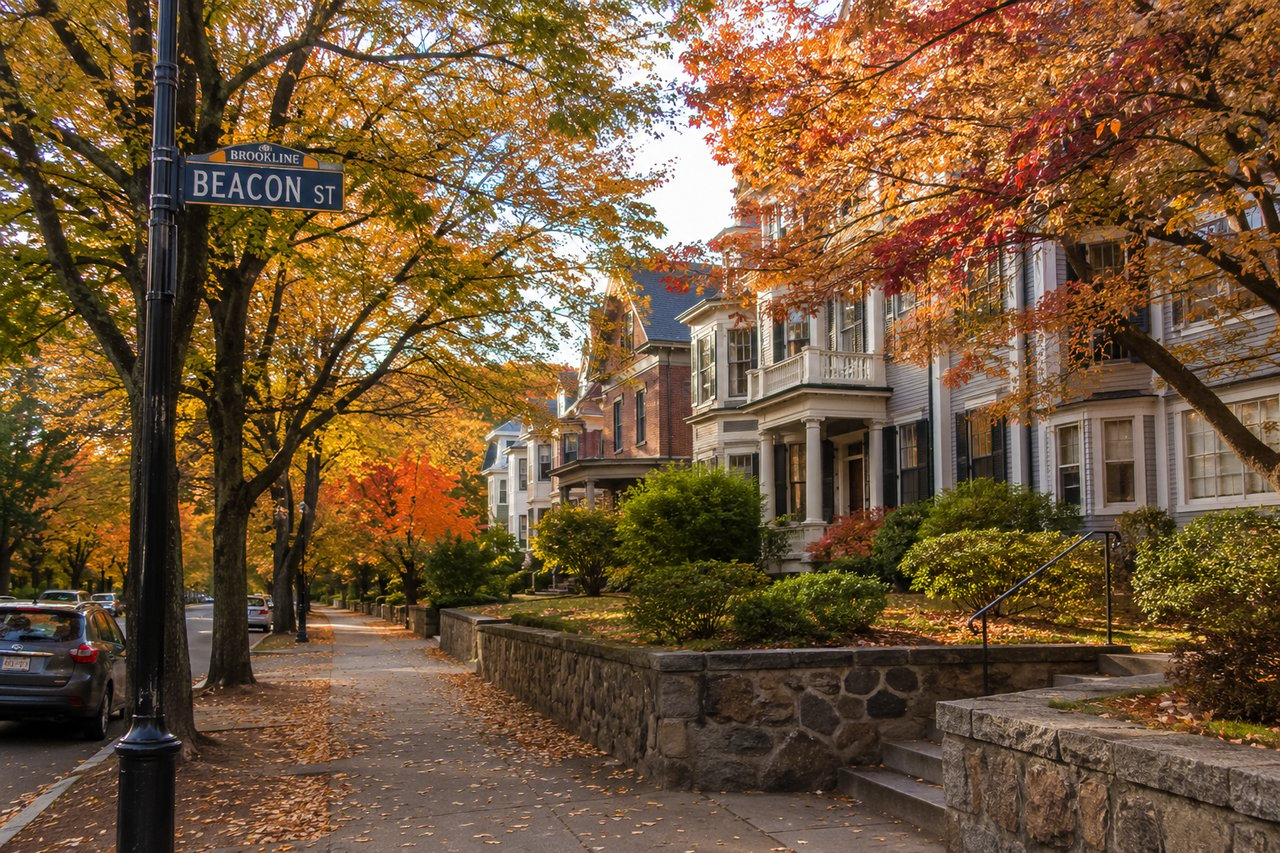
Brookline offers a rare mix of residential character and urban convenience. The town sits about four miles from downtown Boston and is served by the Green Line C, D, and B branches, along with bus routes 51, 60, 65, and 66. If you want more room without giving up your commute or your connection to Brookline, staying local can be a practical option.
That said, moving from a condo to a house within Brookline is not just a matter of finding more bedrooms. It often means entering a different price bracket, a different inventory pool, and a different negotiation environment. Your plan needs to reflect those differences from the start.
Start with Brookline's price gap
One of the biggest surprises for condo owners is how wide the gap can be between condo values and single-family values. According to the Massachusetts Association of Realtors March 2026 report, Brookline's year-to-date median was about $1.338 million for condos and $2.28 million for single-family homes. That is a meaningful jump, even in a market where both property types are expensive.
Inventory also differs by category. The same report showed 2.4 months of condo supply and 4.0 months of single-family supply. In plain terms, condos and houses are moving in related but not identical markets, so your sale strategy and your purchase strategy should not be treated as one decision.
Townwide figures also have limits. Redfin's March 2026 data put Brookline's overall median sale price at $1.65 million, with homes selling in around 19 days, but that broad snapshot can hide major variation by property type and micro-area. When you are moving up, the target house market matters more than the average headline number.
Brookline is not one market
A condo owner in Coolidge Corner is not shopping in the same price environment as a buyer targeting Fisher Hill or South Brookline. That is why broad market summaries can only take you so far. Street-level comps and neighborhood-specific data become essential once you start narrowing your search.
Here is a quick look at how different some Brookline micro-areas were in March 2026:
| Brookline area | Median sale price | Median days on market | Market note |
|---|---|---|---|
| Coolidge Corner | $1.5375M | 32 | Busy, transit-supported market |
| Brookline Village | $1.14M | 24 | Active area with D Line and bus access |
| Washington Square | $1.04M | 61.5 | More mixed and slower-moving |
| South Brookline | $2.1M | 38 | Higher-priced single-family pocket |
| Fisher Hill | $3.4M | 26 | Much higher pricing tier |
This is exactly why budgeting against Brookline as a whole can lead you off course. If your goal is a house in South Brookline, Chestnut Hill, or Fisher Hill, your financial plan needs to reflect those specific areas rather than the town average. In a market like this, precision matters.
Define what "moving up" really means
Before you list your condo or tour houses, get clear on what you actually need from the next home. More square footage is one goal, but layout, lot size, renovation condition, commute pattern, and neighborhood preference may matter just as much. If you skip this step, it is easy to chase listings that do not really solve the reason you want to move.
For some buyers, the priority is a larger kitchen, extra bedrooms, or dedicated work-from-home space. For others, it is outdoor space or a home that needs less compromise over time. In Brookline, it can also mean choosing between a more turnkey home at a higher price point and a property with renovation potential that offers a different kind of value.
School geography can also be part of your search criteria. Brookline's public school system serves more than 7,000 students across one high school and eight pre-K-8 schools, and Baker School serves the Chestnut Hill and South Brookline neighborhoods. For many households, that geographic layer becomes one factor alongside budget, home size, and commute.
Plan the sale and purchase sequence
For many homeowners, the standard path is to sell first and then buy. That sequence can reduce the risk of carrying two housing payments at once. It is often the cleaner financial choice, especially when you are moving into a higher price tier.
The tradeoff is timing. If your condo sells before you secure the right house, you may need temporary housing or a flexible transition plan. In Brookline, where house inventory can be tight in the neighborhoods many move-up buyers want, that possibility should be part of your planning from day one.
If you think your sale and purchase may overlap, talk with your lender early. Bridge financing can be an option in some cases, but the lender will need to document your ability to carry the current home, the new home, the bridge loan, and your other obligations. That is not something to sort out late in the process.
Get serious about lender prep
A move-up purchase in Brookline usually requires more than a quick online estimate. Your lender will look at income, assets, employment, savings, debts, credit report, and credit score. Debt-to-income ratio also matters because it helps determine how much house you can comfortably and credibly finance.
It is also smart to avoid taking on new debt before you buy. A new car loan or large credit card balance can change your ratios and affect your financing options. If you are counting on proceeds from your condo sale, your full financing picture should account for both your current home and your next purchase.
Preapproval deserves special attention. A preapproval letter is tentative, and it often expires in 30 to 60 days. In a market where your search may focus on a narrow slice of Brookline inventory, timing your preapproval to your actual purchase window can help you stay ready without constantly refreshing paperwork.
Expect jumbo financing to be part of the conversation
For many Brookline house buyers, jumbo financing is not a niche issue. It is a likely reality. The 2026 one-unit conforming loan limit for Norfolk County is $962,550, while Brookline's year-to-date single-family median stood at $2.28 million in the March 2026 MAR report.
That gap tells you something important. Many single-family purchases in Brookline will exceed the conforming limit unless the buyer brings a substantial down payment. If you are planning a condo-to-house move, talk with your lender early about whether your target price range points toward jumbo underwriting.
This is another reason not to treat the process casually. Jumbo standards can be more exacting, and your financial documentation, reserves, and overall profile may matter even more. The earlier you understand that landscape, the more confidently you can search.
Build your budget around the target area
A common mistake is assuming your condo equity automatically translates into an easy move-up purchase. Equity helps, of course, but your required cash will depend on the price of the new home, your down payment amount, lender costs, loan type, and location. Closing costs are not one-size-fits-all.
A 20% down payment can improve approval odds, but what matters most is building a plan that reflects your actual target neighborhood and financing structure. If you are aiming for South Brookline or Chestnut Hill, your numbers may look very different than they would in Brookline Village or Washington Square. That difference can shape both your timeline and your negotiating strategy.
Match your strategy to the house type
Not every Brookline house purchase is about finding the biggest home possible. Sometimes the better move is a house with strong bones and renovation potential in the right location. Other times, paying more for a more finished property makes sense if you want a smoother transition after selling your condo.
This is where careful, local analysis matters. In micro-markets with small sample sizes, headline medians can move around based on property mix. Looking closely at style, condition, lot placement, and recent comparable sales can help you avoid overgeneralizing from townwide data.
Create a realistic timeline
A condo-to-house move works best when you treat timing as a strategy, not a guess. Your timeline should coordinate listing preparation, pricing, condo market conditions, lender milestones, and the likely pace of your target house search. In Brookline, those pieces do not always move at the same speed.
Remember that the lender must provide the Closing Disclosure at least three business days before closing. That may sound like a small detail, but it is one reminder that the final stage of a transaction has its own calendar. Good planning leaves room for those fixed milestones instead of letting them become last-minute stress points.
Why local guidance matters
Brookline's appeal is that you can stay close to what already works in your life while upgrading your space. The challenge is that the move from condo to house often crosses market segments, financing categories, and neighborhood price bands all at once. That makes strategy more important than ever.
A thoughtful advisor can help you weigh timing, analyze micro-area pricing, compare tradeoffs between turnkey and renovation-ready homes, and shape a plan around your actual goals. In a market as nuanced as Brookline, that kind of guidance can make the move feel much more manageable.
If you are thinking about a condo-to-house move within Brookline, working with a data-driven, boutique advisor can help you plan the sale and purchase with more clarity and less guesswork. To talk through your options, your target neighborhoods, and the right sequence for your move, schedule a private consultation with Ingvild Brown.
FAQs
What makes a Brookline condo-to-house move challenging?
- The biggest challenges are the price jump from condos to single-family homes, different inventory levels by property type, and the need to coordinate your sale, financing, and purchase timing carefully.
How much more expensive are single-family homes than condos in Brookline?
- In the March 2026 Massachusetts Association of Realtors report, Brookline's year-to-date median was about $1.338 million for condos and $2.28 million for single-family homes.
Should you sell your Brookline condo before buying a house?
- Many owners choose to sell first because it can reduce the risk of carrying two housing payments, but it can also create a temporary gap if your next home takes longer to find.
When should you talk to a lender for a Brookline move-up purchase?
- You should talk to a lender early, especially if your sale and purchase may overlap or if your target price range may require jumbo financing.
Why do Brookline neighborhood differences matter when moving up?
- Brookline micro-areas can have very different price points, pace, and market conditions, so your budget and search strategy should be based on your target area rather than townwide averages.
Could a Brookline house purchase require jumbo financing?
- Yes. Norfolk County's 2026 conforming loan limit is $962,550, and many Brookline single-family purchases are priced well above that level, which can make jumbo financing a realistic consideration.