The Fall 2026 Real Estate Market in Brookline & Newton: What Buyers and Sellers Need to Know
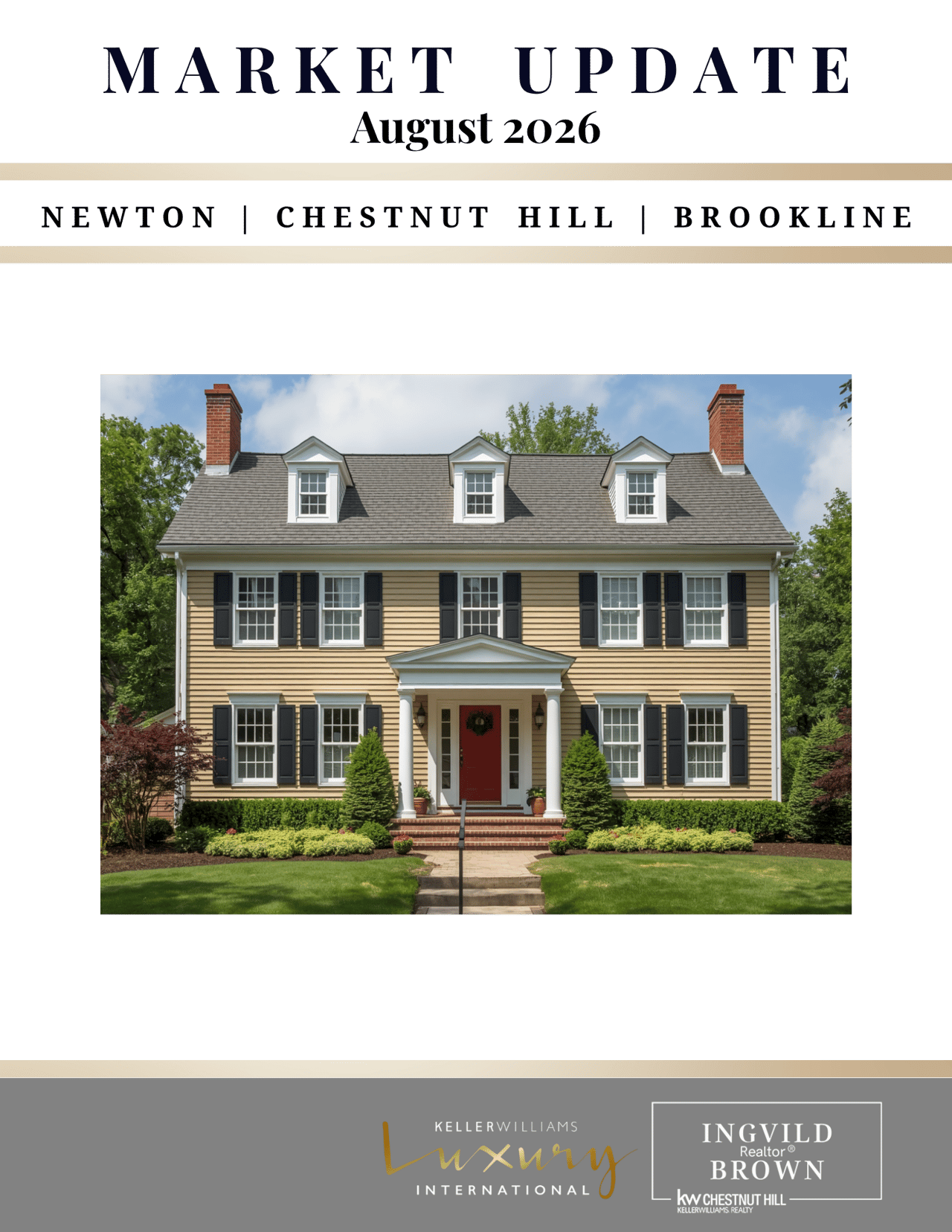
Market Update | August 2026
As summer winds down, the real estate market in Brookline and Newton is approaching an important secondary selling season.
September and early October often bring renewed activity as vacations end, buyers refocus on their searches and sellers introduce new inventory or reposition properties that did not sell during the spring and summer.
But the fall 2026 market is not simply a continuation of spring.
Higher mortgage rates, greater buyer price sensitivity and changing inventory levels are creating a more selective market. At the same time, buyers are increasingly differentiating between homes based on condition, size, functionality and location.
Although Brookline and Newton are neighboring communities, the latest MLS data also show that they are entering the fall from distinctly different positions.
For sellers, that makes pricing, property preparation and launch strategy increasingly important. For buyers, it may create opportunities—but desirable, move-in-ready homes in the best locations can still command significant premiums.
Brookline: More Inventory and Increasing Price Sensitivity
The biggest change heading into fall is occurring in the Brookline single-family market.
As of August 19, Brookline had 48 single-family homes for sale, compared with 46 at the same time last year. More significant is how long that inventory is remaining on the market.
The median days on market for current inventory has increased to 112 days, compared with 103 last year. Brookline now has approximately 5.05 months of single-family inventory, up 16% from 4.35 months a year ago. At the same time, the approximate absorption rate has declined from 23.01% to 19.79%.
Perhaps the strongest indication of increased buyer price sensitivity is the number of sellers adjusting their prices.
Through August 19, 60 Brookline single-family listings had changed price, compared with only 39 during the same period in 2025—an increase of nearly 54%.
The pricing data, however, require some interpretation.
The median sale price year-to-date is $2.525 million, down 9.8% from $2.8 million during the same period last year. Yet the median sale price per square foot actually increased 2.25%, to approximately $790 per square foot.
That divergence suggests that the mix of properties selling is contributing to the decline in the headline median price rather than indicating a uniform decline in Brookline property values.
Transaction volume has clearly slowed. Closed single-family sales are down 9.3% year-to-date, while the median time to receive an offer has increased from 13 to 18 days.
For Brookline sellers, the message heading into fall is important:
Scarcity alone is no longer enough to overcome an ambitious asking price or significant property shortcomings.
Newton: A Tighter and Faster-Moving Market
Newton presents a different picture.
As of August 19, there were 97 single-family homes for sale, almost identical to the 98 available one year earlier. Newton has only approximately 2.25 months of inventory, down slightly from 2.34 months last year, while the absorption rate has improved to 44.5%.
That is a considerably tighter supply-demand balance than Brookline's 5.05 months.
Homes that attract buyers are also moving quickly. The median time to an offer for Newton properties going pending this year is just eight days, compared with nine days last year.
Prices have remained remarkably stable.
The median single-family sale price through August 19 is $1.965 million, essentially unchanged from $1.961 million during the same period in 2025. Median sale price per square foot is approximately $619, also virtually unchanged year over year. The median sale-to-list-price ratio remains 100%.
There is also less new inventory entering the market. Only 530 new single-family listings have been taken year-to-date, compared with 579 last year—a decline of 8.46%.
That limited flow of new inventory helps explain why Newton continues to favor sellers of desirable, appropriately priced homes even as higher interest rates constrain some buyers.
The Growing Divide Between Move-In-Ready and Renovation Properties
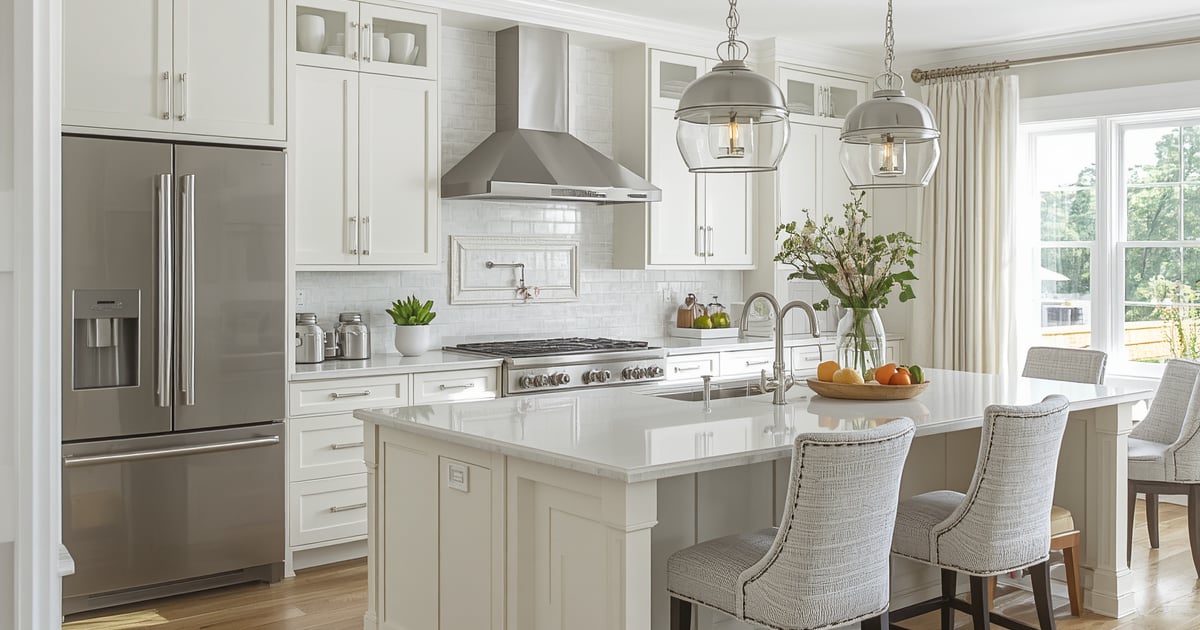
One of the most important trends I see in today's market is something that townwide statistics do not fully capture: buyers are increasingly willing to pay a premium for homes that are already renovated, well designed and move-in ready.
Conversely, older homes requiring substantial renovation can face a much more difficult path to a sale.
This distinction is particularly relevant in Brookline and Newton, where much of the housing stock is older and where larger properties may require significant investment in kitchens, bathrooms, mechanical systems, windows, roofing, electrical systems, energy efficiency and overall layout.
A buyer evaluating such a property is no longer simply comparing the asking price with recent comparable sales. The buyer is mentally adding the cost, time, uncertainty and inconvenience of a major renovation.
Construction and labor costs remain elevated, and significant renovations can take many months. Depending on the scope, buyers may also need to navigate architectural plans, permitting, zoning considerations and unforeseen conditions common to older homes.
As a result, the discount buyers expect for a home needing major work can sometimes be considerably greater than the seller anticipates.
At the other end of the spectrum, a thoughtfully renovated home can command a meaningful premium because it eliminates many of those uncertainties.
For today's buyer, convenience has value.
The Challenge of the Large, Expensive Older Home
This dynamic becomes particularly pronounced with large older homes at higher price points.
Brookline and Newton have an extraordinary inventory of substantial historic and early-20th-century houses. Many offer beautiful architecture, generous rooms, craftsmanship and locations that would be extremely difficult to replicate today.
But size alone does not necessarily translate into value the way sellers might expect.
A 6,000-square-foot house requiring extensive updating can present a very different proposition from a renovated 4,000-square-foot home with an efficient layout and modern systems.
The larger home may carry not only a significant renovation budget but also higher ongoing expenses for heating, cooling, maintenance, landscaping and property taxes.
This creates an important disconnect between some of the existing housing stock and what many contemporary buyers are seeking.
Today's buyer may have the financial ability to purchase a large home without necessarily wanting the responsibility that comes with one.
Buyers Increasingly Want Quality and Convenience—Not Necessarily More Square Footage
At higher price points, I increasingly see buyers prioritizing how a home lives rather than simply how large it is.
A somewhat smaller home can be extremely compelling if it offers the features buyers actually use every day:
- A renovated kitchen connected naturally to everyday living spaces
- A comfortable primary suite
- Updated bathrooms
- A home office or flexible work space
- Good natural light
- Functional mudroom and storage
- Modern heating, cooling and electrical systems
- An attached or conveniently located garage
- Usable outdoor space
- A floor plan that does not require major reconfiguration
This can create a challenge for sellers of very large older homes.
Historically, additional square footage was often viewed almost automatically as additional value. In today's higher-cost environment, buyers may instead ask whether they actually want to pay for, renovate, furnish, heat and maintain that additional space.
That does not make large homes undesirable. Exceptional large homes in prime locations remain highly sought after.
But the market is becoming more discriminating between useful, beautifully finished space and square footage for its own sake.
Location Within the Town Matters More Than Ever
Condition is only part of the equation.
Within both Brookline and Newton, demand can vary significantly from one street or neighborhood to another.
Walkability remains a major value driver.
Buyers frequently place a premium on locations that make daily life easier—particularly homes within convenient walking distance of:
- Public transportation
- Schools
- Village centers
- Restaurants and coffee shops
- Shopping and everyday services
- Parks and recreation
The most attractive streets can therefore substantially outperform less convenient locations even within the same town.
In Brookline, proximity to the Green Line and commercial centers such as Coolidge Corner, Washington Square, Brookline Village and Chestnut Hill can be particularly meaningful, depending on the buyer.
In Newton, proximity to village centers, schools, commuter rail or Green Line service and everyday amenities can similarly influence demand.
The distinction can become even more important at luxury price points.
A buyer spending several million dollars often has many choices, including other Greater Boston communities. A beautiful home on a desirable, walkable street may justify a premium because it offers something that cannot easily be changed later.
A kitchen can be renovated. A house can be expanded. The location cannot be changed.
A Market Increasingly Focused on the Total Lifestyle Proposition
Taken together, these trends suggest that buyers are increasingly evaluating the entire lifestyle proposition rather than simply comparing bedroom counts and square footage.
A property that combines:
Prime location + walkability + modern amenities + excellent condition + an efficient footprint
may outperform a substantially larger property that requires significant renovation or offers a less convenient location.
This is particularly important when interpreting comparable sales.
Two homes of similar square footage in the same town may not actually be close substitutes if one is beautifully renovated and walkable to amenities while the other requires substantial investment or is dependent on driving for most daily activities.
That is one reason broad price-per-square-foot comparisons should be used carefully in Brookline and Newton.
The Greater Boston Economy: Resilient, but Slower
The housing market is also being influenced by a regional economy that remains resilient but is growing more slowly.
The Federal Reserve Bank of Boston reported in July that New England economic activity continued to expand, but only at a slight pace. Employment was roughly unchanged, employers remained cautious about hiring and residential home sales had declined moderately.
The Fed has also reported that high construction costs continue to constrain residential construction.
That is particularly relevant in Greater Boston, where land availability, zoning, permitting and development costs already make adding new housing difficult.
The result is an unusual combination:
Housing demand has moderated, but supply remains structurally constrained.
This helps explain why transaction volume can decline without producing a corresponding decline in property values.
Mortgage Rates Are Affecting Both Demand and Supply
Mortgage rates remain one of the biggest influences on the 2026 housing market.
With 30-year mortgage rates remaining well above the historically low levels available several years ago, buyers face substantially higher monthly ownership costs.
At Brookline and Newton price points, the difference can be significant.
Higher rates reduce purchasing power and make buyers more sensitive to price. They can also magnify the perceived cost of renovation because buyers may be simultaneously financing an expensive purchase and preserving substantial additional capital for improvements.
But higher rates also affect supply.
Many existing homeowners have mortgages with rates well below today's levels. Selling may mean giving up inexpensive financing and purchasing another home at a much higher borrowing cost.
That discourages some homeowners from moving, which helps keep inventory constrained—particularly for desirable, move-in-ready properties.
What Fall 2026 Means for Sellers
The fall market can be an excellent time to sell, but the window is relatively short.
September typically brings buyers and agents back into the market following summer vacations. New listings receive renewed attention, and buyers who did not purchase during the spring often resume their searches.
The disadvantage is time.
A property entering the market in September does not have several months to experiment with pricing before the seasonal slowdown around the holidays.
That makes initial positioning particularly important this fall.
For sellers of older homes requiring significant work, the analysis needs to be especially realistic.
It is important to understand not only what renovated comparable homes have sold for, but also what a buyer will need to invest to make the subject property competitive with those homes.
For move-in-ready sellers, the current environment can create an advantage. When relatively few properties offer the combination of condition, location, modern amenities and an efficient floor plan that buyers want, those homes can stand out and command a premium.
The goal should be to create urgency while the property is new, rather than relying on future price reductions to generate activity later.
What Fall 2026 Means for Buyers
Fall may present some of the most interesting buying opportunities of the year, particularly among properties that have accumulated market time or recently adjusted their prices.
This is especially relevant in Brookline, where the number of price changes has increased substantially and inventory is higher relative to demand.
A property that initially seemed overpriced may become attractive after a meaningful adjustment.
Older homes requiring renovation may offer another opportunity—but buyers should evaluate them carefully.
The purchase price is only one component. A realistic analysis should consider renovation costs, timing, financing, carrying costs and the potential value of the finished property.
At the same time, buyers should recognize that move-in-ready homes in highly desirable locations may continue to command premiums.
Waiting for every property to become negotiable can mean losing the homes that best satisfy the criteria most buyers cannot change later: location, street, lot and proximity to amenities.
The Fall Opportunity
The fall 2026 market in Brookline and Newton is best described as selective rather than uniformly strong or weak.
Brookline is showing more inventory and greater price sensitivity, giving buyers additional leverage and making accurate pricing particularly important for sellers.
Newton remains tighter, with limited inventory and fast offer activity supporting values for desirable homes.
But increasingly, the dividing line is not simply Brookline versus Newton or buyer versus seller.
It is also:
Move-in-ready versus major renovation.
Efficient and functional versus simply large.
Walkable and convenient versus car-dependent.
Prime street and location versus secondary location.
Those differences can have an increasingly significant effect on demand, market time and ultimately price.
For sellers, understanding where a property fits within those distinctions is essential to developing the right pricing and marketing strategy.
For buyers, recognizing those differences can help identify where paying a premium is justified—and where an overlooked or renovation property may represent an opportunity.
In today's market, broad statistics provide the backdrop.
The individual property's condition, functionality and location increasingly determine the outcome.
Sources
Local housing data: MLS Property Information Network (MLS PIN), single-family market statistics for Brookline and Newton, Massachusetts, comparing 2026 with 2025 through August 19, 2026.
Regional economy: Federal Reserve Bank of Boston, Beige Book – First District, July 2026.
Mortgage rates: Freddie Mac Primary Mortgage Market Survey, August 2026.
The observations regarding buyer preferences, renovation properties, walkability and property characteristics reflect local market observations and are not conclusions derived directly from the MLS statistical reports. MLS data is based on information gathered from MLS PIN and other third-party sources and is deemed reliable but not guaranteed. Market conditions can vary substantially by neighborhood, property type, condition and price range.